L'Atelier de Kriss

Design and digitising

From ideato finished product

Beyond bench work, L'Atelier de Kriss brings its design-office experience to bespoke knifemaking projects.

ZWCAD 3D Pro, the design software used at the workshop

The design office

From drawing to manufacturing file

Every project starts with a dedicated study and a three-dimensional model built in ZWCAD 3D Pro. This stage pins down the shapes, dimensions and thicknesses of the knife before a 3D-printed prototype is made or the files for laser cutting are prepared. The workshop also converts between file formats to suit whatever your manufacturer needs.

Depending on what you need, L'Atelier de Kriss can handle a straightforward digitising job or take a project through from end to end: designing a knife, creating a range of table knives, producing a one-off or a small artisan run, personalisation by engraving, and the design of the case and packaging.

Whether you are a private customer, a restaurateur, a company or a brand owner, you get one-to-one guidance from the first sketch through to the finished product.

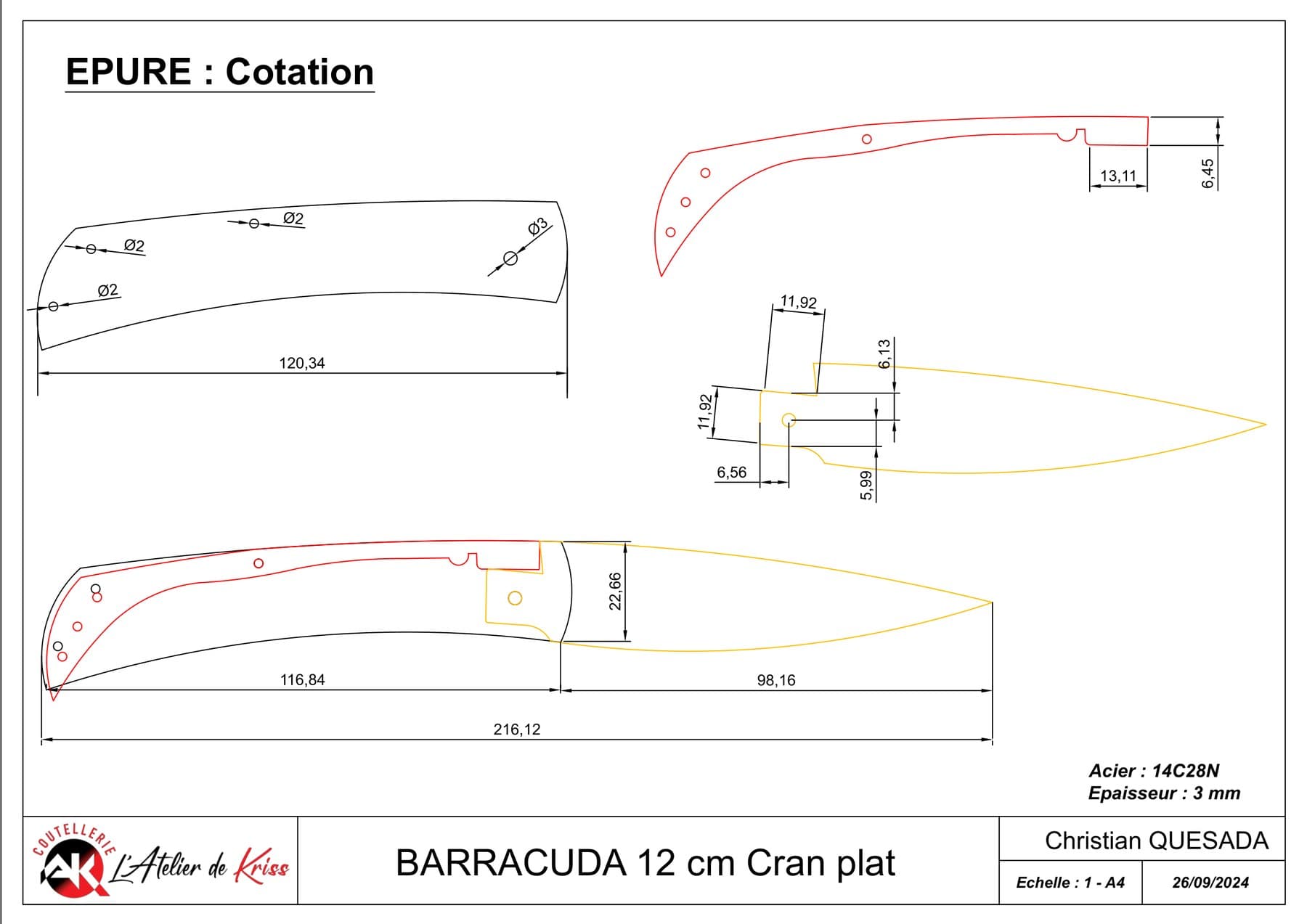
The technical sheet: dimensions, steel, thickness and a title block in the project's name

The service

Digitise, then deliver

Step 1

Digitising your project

Digitising is the first step in turning an idea into a file you can manufacture from. Whether your project is still a sketch or rests on an existing model, the workshop takes it through to a proper drawing.

  • From a freehand sketch and a handful of dimensions
  • From an existing drawing
  • From a blade measured up precisely by hand
  • To reproduce a model, alter it, or prepare it for production
Step 2

File delivery

Files are supplied in the format you ask for, most often DXF, compatible with the main laser-cutting processes. Each file comes with a technical sheet that keeps the data unambiguous and the project traceable.

  • Project reference and client identity
  • Steel grade and material thickness
  • Quantity to produce and production notes
  • Title block in your company's or project's colours

How it runs

Four stages

  1. 01

    Study

    Talking through the brief, reading the sketch or measuring up the existing blade.

  2. 02

    Modelling

    Three-dimensional modelling in ZWCAD 3D Pro: shapes, dimensions and thicknesses.

  3. 03

    Prototype

    3D printing to confirm the shapes and the feel in the hand before anything is cut.

  4. 04

    Files

    A DXF ready for laser cutting, with its technical sheet alongside.

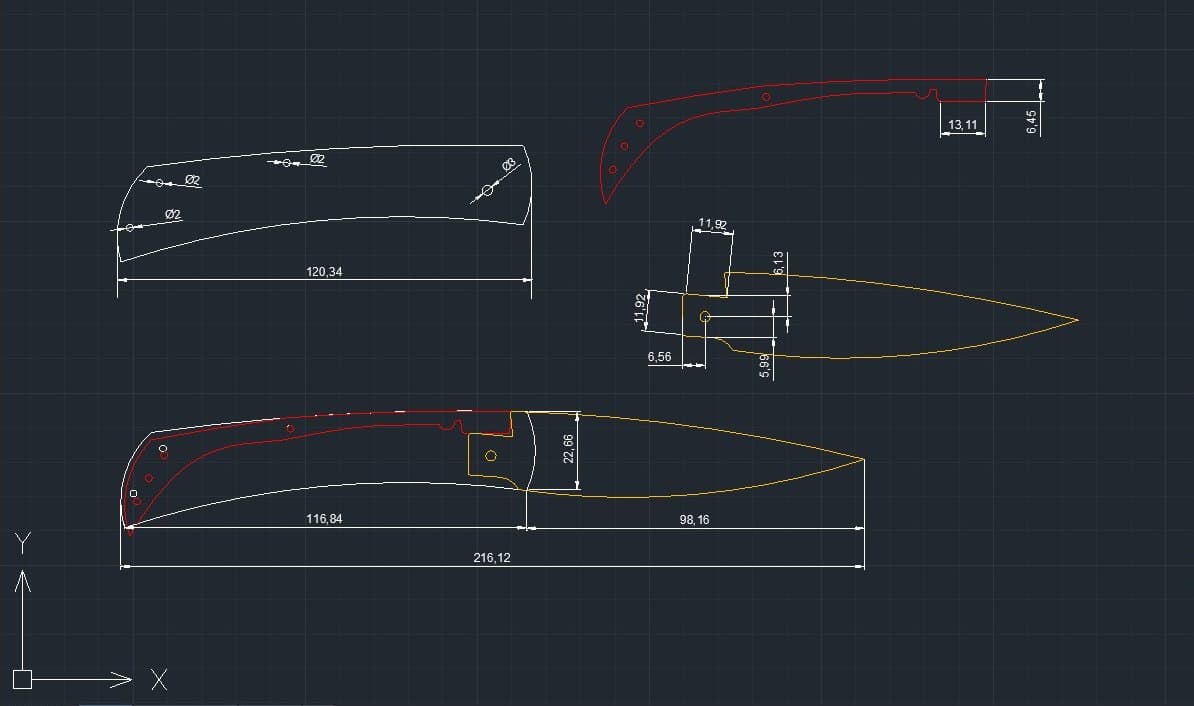
The Barracuda folder modelled up: liner, spring and blade, fully dimensioned
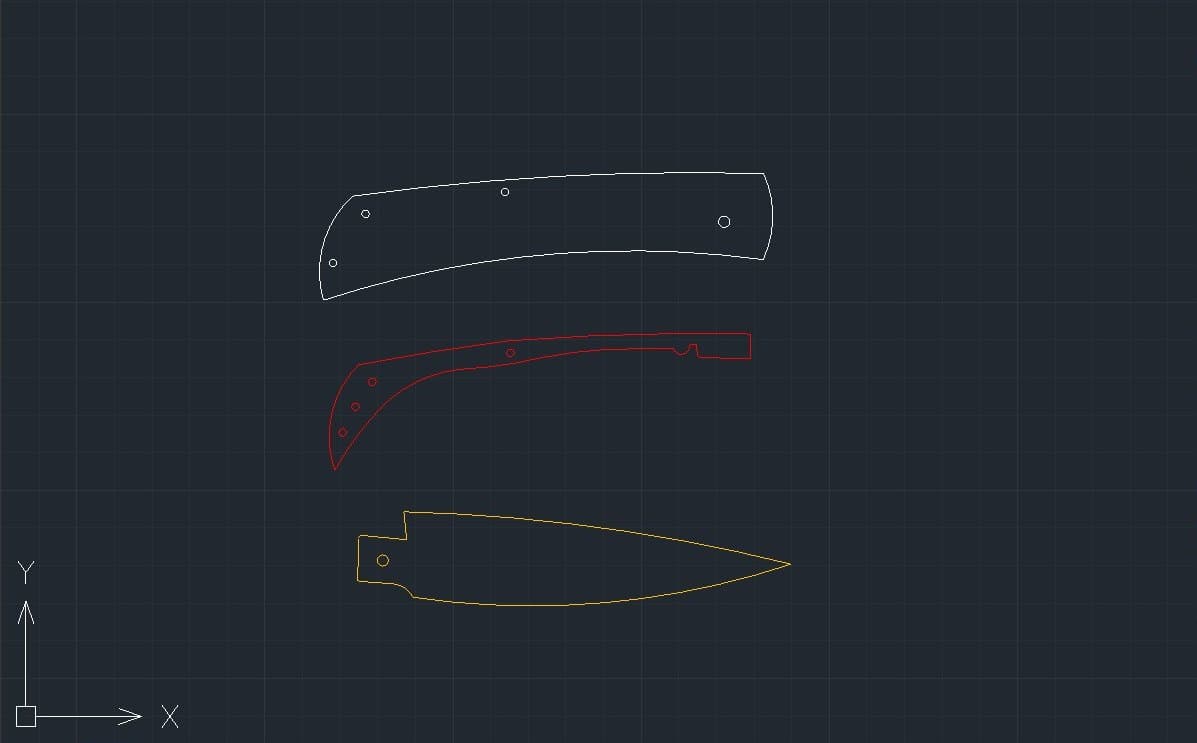
The same file stripped back to its outlines, ready for laser cutting

3D printing

Seeing the piece before cutting it

The workshop has its own 3D printer. Before anything is cut, the piece is printed in plastic at full scale.

You hold it, check the balance, the bulk in a pocket, where the fingers fall. A correction at this stage costs a print; the same correction after cutting costs a blade.

The prototype is handed over with the files, so you keep a physical record of what was approved.

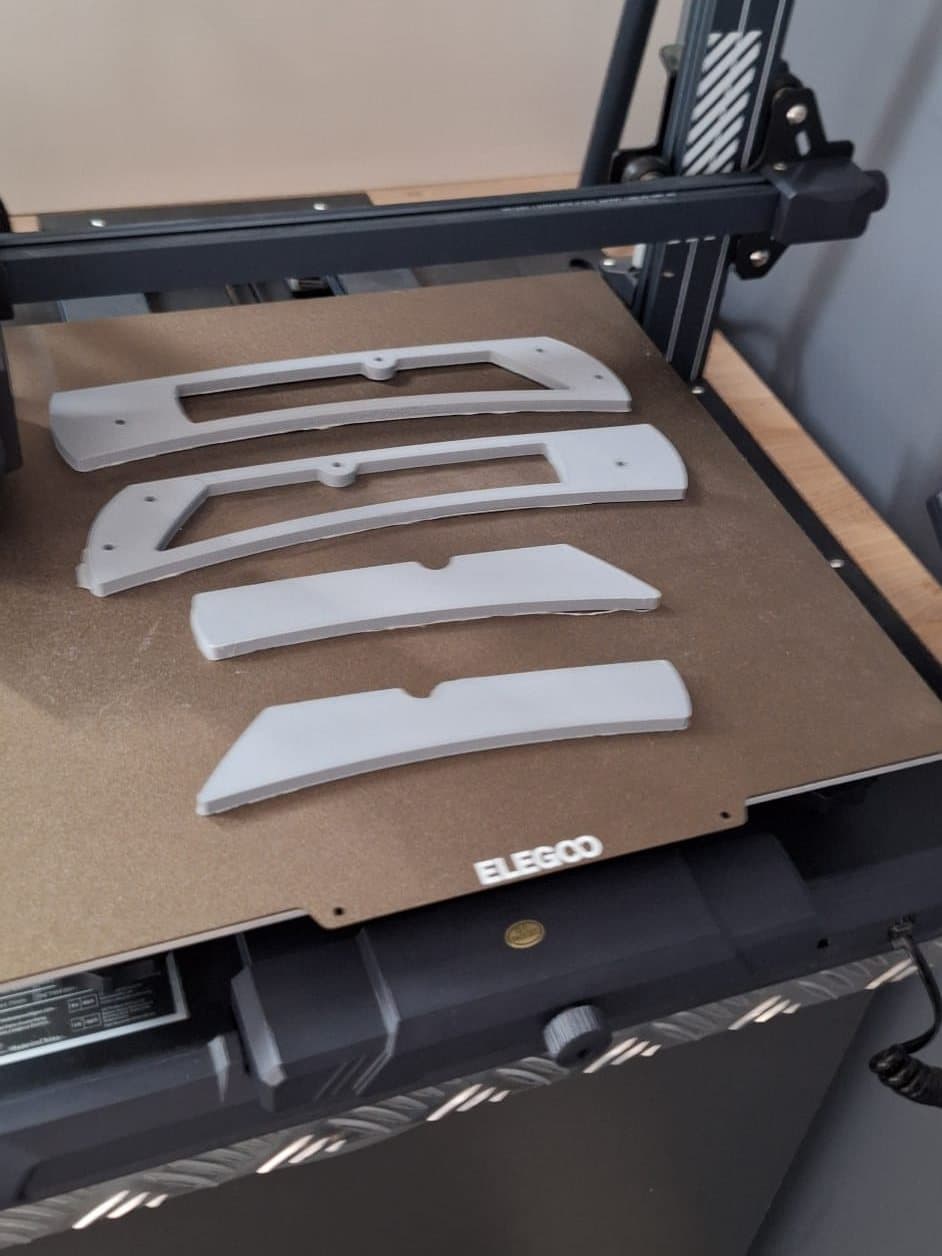
The workshop also produces the outlines and jigs used to make table knives or folding-knife mechanisms. Those jigs can be printed at different scales for use with a pantograph.

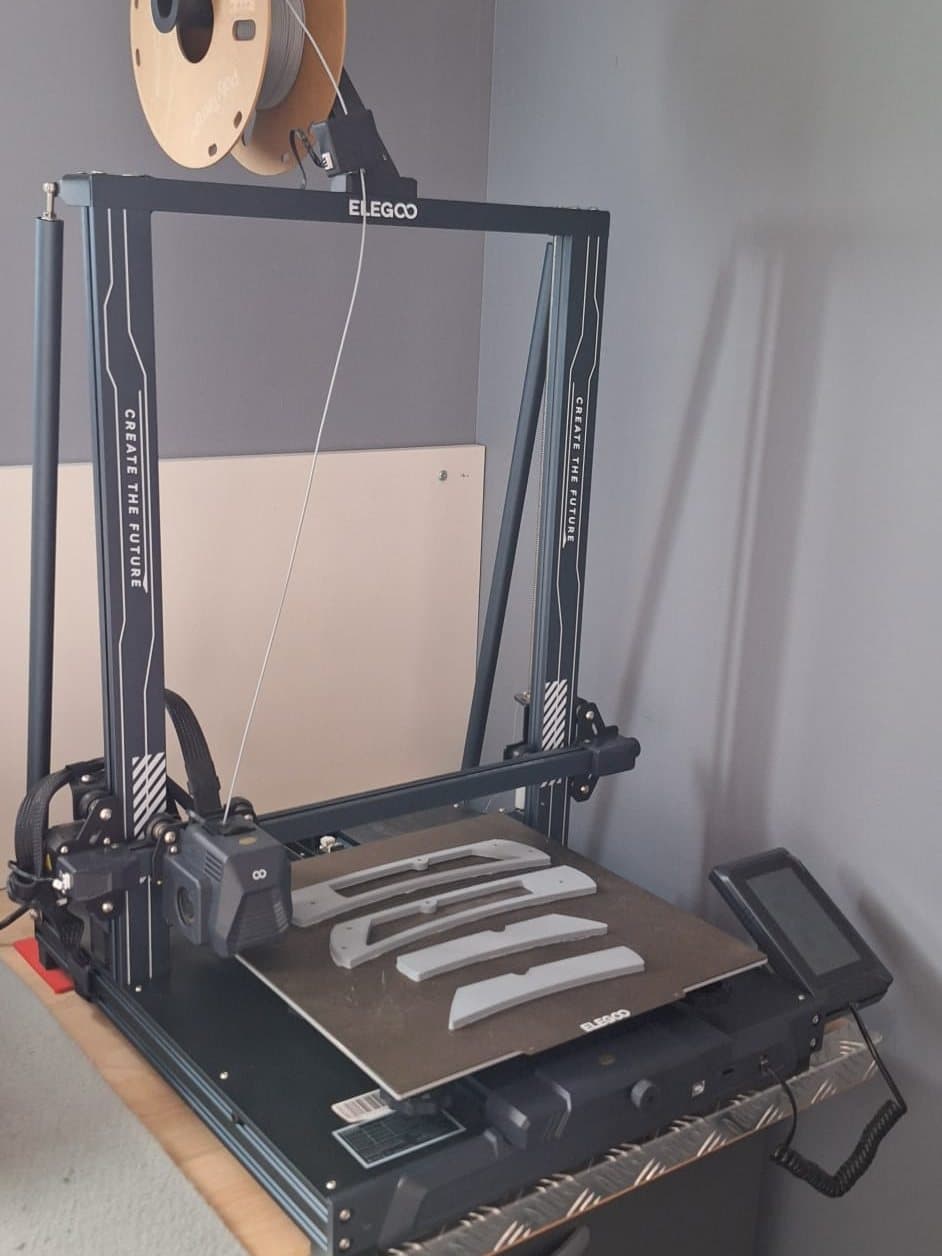
The workshop's 3D printer, mid-print
Jigs printed at twice scale, ready to be mounted on the pantograph

Who it is for

From private customers to brand owners

One piece, a small run

Private customers and restaurateurs: reproduce a knife you are attached to, make it evolve, or have a one-off drawn up before it goes into production.

A range, a presentation case

Companies and brand owners: creating a range of table knives, small artisan runs, personalisation by engraving, and the design of the case and packaging.

Output formats: DXF most of the time, or whatever your manufacturer needs — conversion is part of the job.

A project to draw up?

A sketch, a blade to reproduce or a full range to develop: describe the project and we will work out together what it takes.